
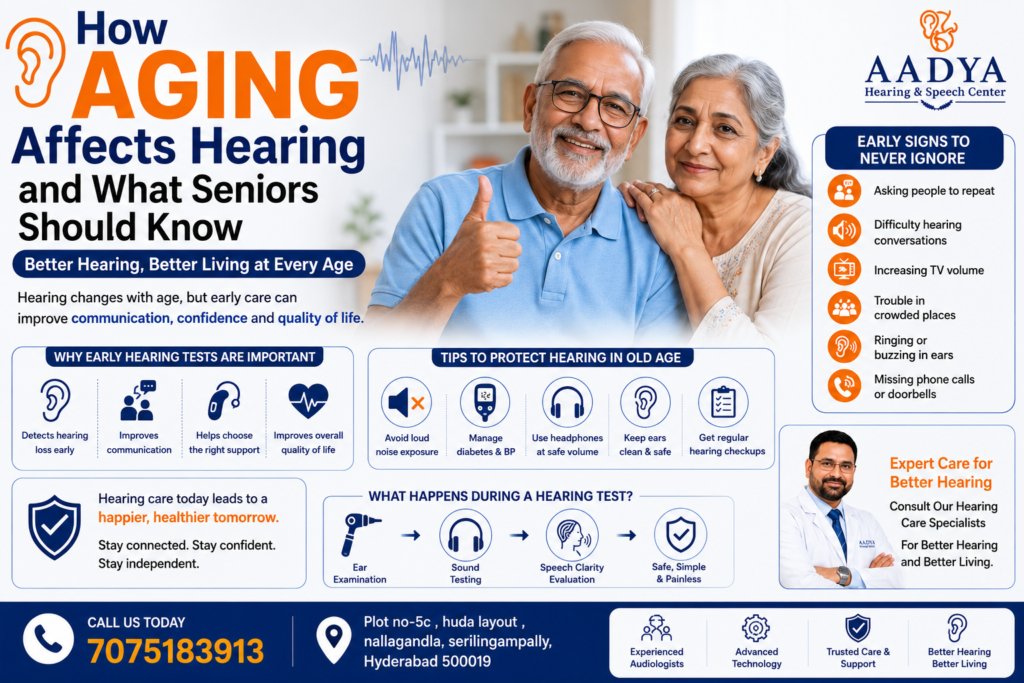
How Aging Affects Hearing and What Seniors Should Know
1. Introduction
- Hearing naturally becomes weaker as people grow older.
- Many senior citizens ignore hearing problems because they think hearing loss is a normal part of aging.
- But untreated hearing problems can seriously affect:
- Communication
- Emotional health
- Confidence
- Social life
- Daily safety
- In busy cities like Hyderabad, long-term exposure to:
- Traffic noise
- Loud environments
- Work stress
- Headphone usage
can increase hearing problems further.
- Many elderly people notice hearing changes slowly over time, so they delay hearing tests and treatment.
- Early hearing care helps seniors:
- Communicate better
- Stay socially active
- Improve confidence
- Maintain better quality of life
2. Understanding Age-Related Hearing Loss
What is Age-Related Hearing Loss?
- Age-related hearing loss is gradual hearing reduction that happens as people grow older.
- This condition is very common after age 50 or 60.
- Hearing ability may reduce slowly over several years.
- Most seniors first notice difficulty understanding speech clearly rather than complete hearing loss.
Common early experiences
- Asking people to repeat
- Difficulty hearing soft voices
- TV volume becoming louder
- Trouble hearing in crowded places
Why Hearing Weakens with Age
- The inner ear contains delicate hair cells and hearing nerves.
- These structures help convert sound into signals for the brain.
- As people age
- Hearing nerves become weaker
- Inner ear cells slowly wear out
- Sound processing becomes less effective
- Long-term exposure to loud sound also increases hearing damage over time.
Common contributing factors
- Traffic noise
- Loud workplaces
- Headphone overuse
- Health conditions like diabetes and blood pressure
- Once hearing nerves become damaged, hearing clarity reduces gradually.
3. Common Causes of Hearing Loss in Seniors
Natural Aging Process
- Aging naturally affects hearing sensitivity.
- Sound clarity becomes weaker slowly over time.
- High-pitched sounds usually become difficult to hear first.
Long-Term Noise Exposure
- Many seniors were exposed to loud sounds for many years during work or travel.
Common examples
- Factory noise
- Traffic sounds
- Construction environments
- Loud machinery
- Continuous sound exposure damages hearing slowly.
Diabetes and Blood Pressure Problems
- Diabetes and high blood pressure affect blood circulation and nerve health.
- Poor blood flow can reduce oxygen supply to the inner ear.
- This may increase hearing damage risk.
Ear Infections or Wax Blockage
- Earwax buildup becomes more common with age.
- Wax blockage can temporarily reduce hearing ability.
- Some seniors may also experience recurring ear infections.
Certain Medications
- Some medicines may affect hearing when used for long periods.
- Seniors taking multiple medications should monitor hearing regularly.
4. Early Signs Seniors Should Never Ignore
Asking People to Repeat Frequently
- One of the most common warning signs.
Common phrases
- “Please repeat.”
- “Speak louder.”
- “I didn’t hear properly.”
- Speech may sound unclear even when volume seems normal.
Difficulty Hearing Conversations
- Seniors may hear sounds but struggle to understand words clearly.
Difficult situations
- Group discussions
- Family gatherings
- Phone calls
Increasing TV Volume
- Family members often notice TV volume becoming too loud.
- The senior person may not realize the volume increase.
Trouble Hearing in Crowded Places
- Background noise makes conversations difficult.
Common difficult places
- Restaurants
- Functions
- Shopping areas
- Public places
Ringing or Buzzing in the Ears
- Some seniors hear ringing sounds even in quiet environments.
- This condition is called tinnitus.
Common tinnitus sounds
- Ringing
- Buzzing
- Humming
Missing Phone Calls or Doorbells
- Reduced hearing affects awareness of daily sounds.
Common missed sounds
- Doorbells
- Phone ringtones
- Alarm sounds
5. How Hearing Loss Affects Daily Life in Seniors
Communication Problems
- Hearing loss creates misunderstandings during conversations.
Common problems
- Missing important information
- Difficulty following discussions
- Communication frustration
Emotional Stress and Frustration
- Continuous hearing difficulty may affect emotional well-being.
Common emotional effects
- Stress
- Irritation
- Anxiety
- Reduced confidence
Social Isolation
- Many seniors avoid conversations because hearing becomes difficult.
Common behaviors
- Staying quiet during gatherings
- Avoiding social events
- Reduced interaction with friends and family
Reduced Confidence
- Communication struggles may lower self-confidence slowly over time.
Safety Concerns
- Hearing loss may reduce awareness of warning sounds.
Safety risks include
- Missing alarms
- Not hearing traffic sounds
- Missing emergency alerts
6. Why Early Hearing Tests Are Important for Seniors
Detects Hearing Loss Early
- Hearing tests help identify hearing problems before they become severe.
- Early detection improves hearing management.
Improves Communication Ability
- Better hearing support improves speech understanding and conversation comfort.
Helps Choose Proper Hearing Support
- Professional evaluation helps identify the right hearing care solution.
Improves Overall Quality of Life
- Better hearing improves:
- Social interaction
- Emotional comfort
- Independence
- Confidence
7. What Happens During a Hearing Test?
Ear Examination
- Ear checked for:
- Wax buildup
- Infection
- Blockage
Sound Testing
- Different sound levels are played through headphones.
- Patient responds when sounds are heard.
Speech Clarity Testing
- Measures how clearly speech is understood.
Safe and Comfortable Process
- Hearing tests are:
- Safe
- Simple
- Painless
- Non-surgical
Hearing Care Support for Seniors in Hyderabad
- Professional hearing evaluations help identify hearing problems accurately.
- Personalized hearing support improves comfort and communication ability.
- Senior citizens should never ignore hearing changes because early hearing care improves long-term quality of life.
- Regular hearing monitoring helps seniors stay:
- Socially active
- Emotionally healthy
- More independent
- Better connected with family and friends
Conclusion
- Hearing loss is common with aging, but it should never be ignored.
- Early hearing testing helps seniors improve communication, confidence, and emotional well-being.
- Proper hearing care and regular hearing monitoring support better quality of life in old age.
- Early hearing support helps seniors stay active, safe, and socially connected for many years.