
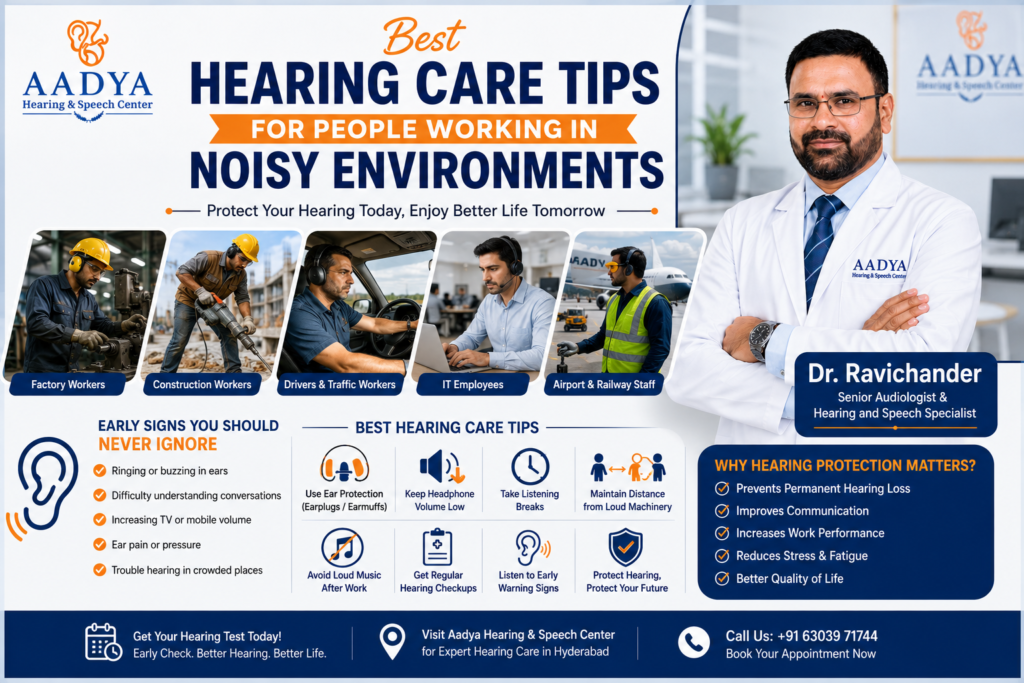
Best Hearing Care Tips for People Working in Noisy Environments
1. Introduction
- Many people work daily in noisy environments without realizing how seriously loud sound can damage hearing.
- Hearing damage usually happens slowly, so most workers ignore the early warning signs.
- By the time communication problems become noticeable, hearing damage may already be permanent.
- In busy cities like Hyderabad, people are exposed to loud sounds from:
- Heavy traffic
- Construction work
- Industrial machinery
- Loud workplaces
- Continuous headphone usage
- Workers in noisy environments face higher risk of hearing problems because ears are exposed to loud sound for many hours every day.
- Noise-related hearing damage can affect:
- Daily communication
- Job performance
- Mental focus
- Social confidence
- Overall quality of life
- The good news is that many hearing problems can be prevented with proper hearing care habits and early hearing testing.
2. What is Noise-Induced Hearing Loss?
- Noise-induced hearing loss happens when loud sounds damage the sensitive structures inside the ear.
- The inner ear contains tiny hair cells that help send sound signals to the brain.
- Continuous loud noise slowly damages these cells.
- Once these hair cells are permanently damaged, hearing ability becomes weaker.
- This type of hearing loss usually develops gradually over months or years.
- Many workers do not notice the problem in the beginning because hearing damage happens slowly.
How Loud Noise Damages Hearing
- Loud sound creates stress inside the ear.
- Continuous exposure weakens hearing nerves and inner ear structures.
Common harmful sound sources
- Heavy machinery
- Drilling machines
- Factory equipment
- Vehicle horns
- Loud speakers
- High-volume headphones
- Long-term exposure without protection increases permanent hearing damage risk.
3. Jobs That Have Higher Risk of Hearing Damage
Factory Workers
- Factory environments often contain continuous machine noise.
- Workers exposed to machinery for many years face high hearing loss risk.
Common noise sources
- Heavy industrial machines
- Metal cutting equipment
- Compressors
- Power tools
Construction Workers
- Construction sites are extremely noisy environments.
Common sound exposure
- Cement cutting
- Drilling
- Hammering
- Road work machinery
- Continuous exposure without ear protection damages hearing slowly.
Drivers and Traffic Workers
- Drivers in busy cities hear traffic noise every day for long hours.
Common sound exposure
- Vehicle horns
- Engine sounds
- Traffic congestion noise
- Long-term traffic exposure can reduce hearing clarity gradually.
IT Employees Using Headphones
- Many office employees use headphones for long meetings and calls.
Common risky habits
- High headset volume
- Long online meetings
- Continuous earphone use without breaks
- Unsafe listening habits can damage hearing even in office environments.
Airport and Railway Workers
- Transport workers face strong sound exposure daily.
Common noise sources
- Aircraft engines
- Train sounds
- Announcement systems
- Mechanical equipment
4. Early Signs of Hearing Damage You Should Never Ignore
Ringing Sound in Ears
- Many workers hear ringing or buzzing sounds after noisy work shifts.
- This condition is called tinnitus.
Common tinnitus sounds
- Ringing
- Buzzing
- Humming
- Whistling
- Continuous ringing is an important warning sign.
Difficulty Understanding Conversations
- People may hear voices but fail to understand words clearly.
Common situations
- Group discussions
- Office meetings
- Crowded environments
- Speech clarity becomes weaker slowly.
Increasing TV or Mobile Volume
- One of the most common early symptoms.
Warning signs
- TV volume feels normal to you but too loud for others
- Using maximum mobile volume regularly
Ear Pain or Ear Pressure
- Loud sound exposure sometimes creates pressure or discomfort inside ears.
- Continuous discomfort should never be ignored.
Trouble Hearing in Crowded Places
- Hearing problems become more noticeable in noisy environments.
Difficult places
- Restaurants
- Functions
- Markets
- Public transport areas
- Background noise makes conversations difficult.
5. How Workplace Noise Affects Daily Life
Communication Problems
- Hearing damage affects speech understanding.
- Workers may misunderstand instructions or conversations.
Common communication issues
- Asking people to repeat
- Missing important details
- Difficulty hearing phone calls
Reduced Work Performance
- Poor hearing affects concentration and productivity.
- Miscommunication can create workplace mistakes.
Mental Fatigue
- The brain works harder to understand unclear speech.
- This creates listening fatigue and mental tiredness.
Stress and Irritation
- Constant difficulty hearing conversations creates frustration.
- Many workers become stressed in social situations.
6. Best Hearing Protection Tips for Noisy Work Environments
Use Ear Protection Devices
- Ear protection is one of the best ways to prevent hearing damage.
Useful protection tools
- Earplugs
- Earmuffs
- Industrial hearing protection equipment
- Proper protection reduces harmful sound exposure significantly.
Reduce Headphone Volume
- Avoid maximum sound levels while using earphones or headsets.
Safe listening habits
- Keep moderate volume
- Avoid long continuous listening
Take Listening Breaks
- Ears also need rest after loud sound exposure.
Helpful habits
- Remove headphones during breaks
- Spend time in quiet environments
Maintain Distance from Loud Machinery
- Standing closer to loud machines increases hearing damage risk.
- Safe distance reduces sound exposure intensity.
Avoid Loud Music After Work
- Many workers expose ears to more loud sound after work using headphones or speakers.
- This increases stress on hearing nerves further.
Get Regular Hearing Checkups
- Regular hearing tests help identify problems early.
- Early diagnosis improves long-term hearing protection.
- Workers exposed to loud environments should not wait until hearing becomes severely affected.
7. Why Early Hearing Tests Are Important
- Hearing damage develops slowly and silently.
- Many people notice problems only after communication becomes difficult.
Hearing tests help
- Detect early hearing loss
- Measure hearing levels accurately
- Prevent worsening damage
- Select proper hearing support if needed
- Early treatment gives better long-term results.
8. Can Noise-Induced Hearing Loss Be Reversed?
- Temporary hearing fatigue may improve with proper rest.
- But permanent nerve damage usually cannot fully recover.
- This is why prevention is extremely important.
Early protection helps
- Reduce hearing damage risk
- Maintain speech clarity
- Protect long-term hearing health
9. How Hearing Tests Work
Ear Examination
- Ear checked for wax or infection.
Sound Testing
- Different sounds are played through headphones.
- Patient responds when sounds are heard.
Speech Understanding Test
- Measures how clearly words are understood.
Conclusion
- Continuous loud sound exposure can slowly damage hearing permanently.
- Many workers ignore early symptoms until communication problems become serious.
- Safe listening habits and hearing protection play an important role in preventing hearing damage.
- Regular hearing tests help detect problems early and improve hearing health management.
- Protecting hearing today is much easier than managing permanent hearing damage later.