
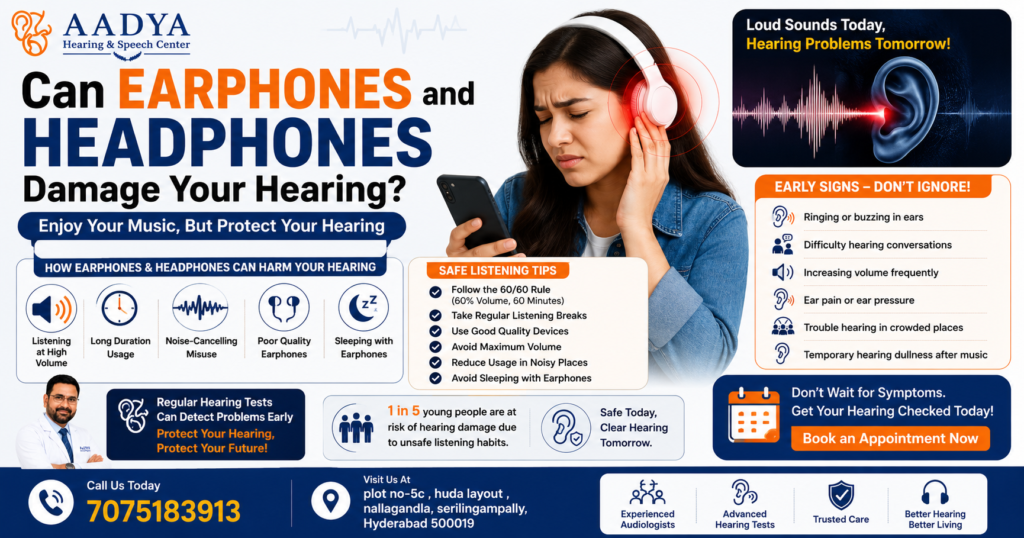
Can Earphones and Headphones Damage Your Hearing?
1. Introduction
- Earphones and headphones have become part of everyday life.
- People use them for
- Music
- Movies
- Online classes
- Office meetings
- Gaming
- Gym workouts
- Many people use earphones for several hours daily without understanding the long-term hearing risks.
- Continuous high-volume listening can slowly damage hearing permanently.
- In cities like Hyderabad, headphone usage has increased because of:
- Work-from-home jobs
- Long online meetings
- Mobile addiction
- Gaming culture
- Social media usage
- Most people do not notice hearing damage during the early stages because symptoms develop slowly.
- By the time communication problems become obvious, hearing damage may already be serious.
- Safe listening habits and early hearing care are very important to protect long-term hearing health.
2. How Human Hearing Works
Simple Explanation of the Ear
- The ear collects sound from the environment.
- Sound travels through the ear canal and reaches the inner ear.
- Inside the inner ear, tiny hair cells help convert sound vibrations into signals for the brain.
- The brain then understands these signals as speech, music, or other sounds.
- These hearing cells are extremely delicate and sensitive.
Why Inner Ear Cells Are Sensitive
- Loud sounds create pressure inside the ear.
- Continuous loud sound exposure damages sensitive hearing cells slowly.
Important fact
- Damaged hearing cells usually do not regenerate naturally.
- Once severe damage happens
- Hearing clarity reduces
- Speech understanding becomes difficult
- Permanent hearing loss risk increases
3. How Earphones and Headphones Can Damage Hearing
Listening at High Volume
- High sound levels directly stress hearing nerves and inner ear structures.
Common risky habits
- Listening at maximum volume
- Increasing volume in noisy places
- Using loud bass settings
- Many people increase volume because surrounding noise blocks hearing clarity.
Examples
- Listening during traffic travel
- Using headphones in gyms
- Loud gaming sessions
- Long-term loud volume exposure damages hearing slowly over time.
Long Duration Usage
- Continuous listening without breaks increases pressure on hearing nerves.
Risky listening habits
- Wearing earphones for many hours daily
- Long office meetings using headsets
- Listening to music during sleep
- Ears need rest after sound exposure just like eyes need rest after screen usage.
Noise-Cancelling Misuse
- Some people misuse noise-cancelling devices by increasing volume too much.
- Loud listening is still dangerous even with advanced headphones.
- Noise cancellation should reduce the need for high volume, not encourage louder listening.
Poor-Quality Earphones
- Cheap earphones often produce distorted sound.
- Distorted sound creates extra stress inside the ear.
Common problems
- Sharp sound output
- Uneven audio quality
- Sudden sound spikes
- Poor-quality devices may increase listening fatigue faster.
Sleeping with Earphones
- Sleeping with earphones for long hours is unhealthy for ears.
Possible problems
- Continuous sound exposure
- Ear canal discomfort
- Increased infection risk
- Hearing fatigue
- Many people unknowingly expose ears to sound for the entire night.
4. Early Signs of Hearing Damage You Should Never Ignore
Ringing or Buzzing in Ears
- Ringing after headphone use is an early warning sign.
- This condition is called tinnitus.
Common tinnitus sounds
- Ringing
- Buzzing
- Humming
- Whistling
- Frequent tinnitus may indicate hearing stress or damage.
Difficulty Hearing Conversations
- People may hear sounds but struggle to understand speech clearly.
Common situations
- Phone conversations
- Crowded environments
- Fast speech
- Speech clarity reduces slowly.
Increasing Volume Frequently
- One common warning sign is continuously increasing sound levels.
Examples
- TV volume becomes louder
- Mobile sound always stays high
- Headphone volume feels “not enough”
- This may indicate reduced hearing sensitivity.
Ear Pain or Ear Pressure
- Loud listening sometimes creates pressure or discomfort inside the ear.
Symptoms include
- Ear heaviness
- Mild pain
- Sound sensitivity
- Continuous discomfort should never be ignored.
Trouble Hearing in Crowded Places
- Hearing damage becomes more noticeable in noisy environments.
Difficult places include
- Restaurants
- Shopping malls
- Parties
- Public transport
- Background noise makes conversations difficult.
Temporary Hearing Dullness After Music
- Some people notice reduced hearing after loud music exposure.
Common feelings
- Muffled hearing
- Ear fullness
- Temporary dull sound perception
- Frequent temporary hearing dullness may become permanent over time.
5. Who is at Higher Risk?
Students
- Students use headphones for:
- Online classes
- Music
- Gaming
- Social media content
- Long study sessions with headphones increase hearing stress.
IT Employees
- Office workers often use headsets for many hours daily.
Common risks
- Long online meetings
- Continuous voice calls
- High headset volume
Gamers
- Gaming headsets expose users to sudden loud sounds for long durations.
Risk factors
- Explosive game sounds
- Long gaming hours
- High sound intensity
Gym Users
- Loud gym music encourages people to increase headphone volume further.
Children and Teenagers
- Young ears are more sensitive to loud sound damage.
Common risky habits
- High mobile usage
- Loud music listening
- Long gaming sessions
- Early hearing damage during childhood may affect long-term hearing health.
6. Can Hearing Damage from Earphones Become Permanent?
- Yes, long-term unsafe listening habits can permanently damage hearing nerves.
Temporary hearing fatigue may improve with
- Rest
- Reduced sound exposure
- But severe nerve damage often cannot fully recover.
- Prevention is extremely important because permanent hearing loss is difficult to reverse completely.
7. Safe Earphone and Headphone Usage Tips
Follow the 60/60 Rule
Safe listening habit
- Maximum 60% volume
- Maximum 60 minutes continuously
- This reduces long-term hearing stress.
Take Listening Breaks
- Give ears regular rest between listening sessions.
Helpful habits
- Remove earphones during breaks
- Spend time in quiet environments
Use Good Quality Devices
- Better sound quality reduces listening stress.
Good devices provide
- Balanced sound
- Reduced distortion
- Better clarity at lower volume
Avoid Maximum Volume
- Maximum volume creates direct stress on hearing nerves.
- Moderate volume is much safer for long-term listening.
Reduce Usage in Noisy Environments
- People usually increase volume in traffic or public places.
- Avoid loud listening in already noisy surroundings.
Avoid Sleeping with Earphones
- Ears need quiet rest during sleep.
- Continuous overnight sound exposure increases hearing fatigue.
8. Why Regular Hearing Tests Are Important
Early Detection Helps Prevent Severe Damage
- Hearing tests identify early hearing changes before symptoms become severe.
Hearing Tests Monitor Hearing Health
- Regular monitoring helps track hearing ability over time.
Better Hearing Protection Planning
- Professional evaluation helps recommend safer hearing habits and support if needed.
9. Common Mistakes People Make
Ignoring Ringing in Ears
- Many people assume tinnitus is temporary and harmless.
Using Cheap Earphones
- Poor audio quality increases hearing stress.
Listening at Maximum Volume Daily
- Continuous loud listening is one of the biggest causes of hearing damage.
Delaying Hearing Tests
- Waiting too long may worsen hearing problems.
Conclusion
- Earphones and headphones are useful devices, but unsafe listening habits can slowly damage hearing permanently.
- Early symptoms like ringing ears, speech difficulty, and increasing volume should never be ignored.
- Safe listening habits and regular hearing tests help protect long-term hearing health.
- Prevention is always easier and safer than managing permanent hearing damage later.