
Signs You Need a Hearing Test Before Buying Any Hearing Device
1. Introduction
- Hearing problems usually develop slowly, so many people do not notice the issue in the beginning.
- Most people think:
- Others are speaking softly
- Mobile network is bad
- TV audio quality is poor
- They are simply tired or distracted
- But in reality, these can be early signs of hearing loss.
- Many people directly purchase hearing devices online or from local stores without understanding their actual hearing condition.
- This is a major mistake because hearing loss is different for every person.
- A hearing device should not be selected based only on:
- Price
- Brand name
- Advertisements
- Recommendations from friends
- Proper hearing testing is necessary because:
- Some people have mild hearing loss
- Some have severe hearing damage
- Some only have temporary ear blockage
- Some may have medical conditions affecting hearing
- In busy cities like Hyderabad, hearing issues are increasing because of:
- Continuous traffic noise
- Loud work environments
- Construction sounds
- Long-term earphone use
- High sound exposure during travel and events
- Early hearing testing helps:
- Identify the exact problem
- Prevent worsening of hearing damage
- Improve communication quality
- Select the correct hearing solution
- Ignoring symptoms for too long can affect:
- Family communication
- Work performance
- Social confidence
- Mental well-being
- Daily safety
2. Why a Hearing Test is Important Before Buying a Hearing Device
Every Hearing Problem is Different
- Hearing loss is not the same for everyone.
- Two people may have completely different hearing conditions even if symptoms look similar.
Example 1
- One person may struggle only in crowded places.
Example 2
- Another person may not hear phone conversations clearly even in quiet rooms.
- Some people lose ability to hear:
- High-pitch sounds
- Soft voices
- Fast speech
- Background speech clarity
- Without testing, selecting the correct hearing device becomes difficult.
Hearing Tests Identify the Exact Hearing Level
A hearing test helps identify whether hearing loss is:
- Mild
- Moderate
- Severe
- Profound
- This information is extremely important because every hearing level needs different support.
Mild hearing loss may need
- Small sound support
- Speech clarity enhancement
Severe hearing loss may need
- Strong amplification
- Advanced sound processing technology
Wrong Devices Can Create Bigger Problems
- Many cheap hearing products available online only increase sound volume.
- They do not improve speech clarity properly.
Problems caused by unsuitable hearing devices
- Sound becomes too loud
- Background noise increases
- Speech remains unclear
- Ear discomfort develops
- Headaches or listening fatigue occur
- Some people stop using hearing devices completely because they bought unsuitable products without testing.
Hearing Tests Help Find the Root Cause
Hearing problems can happen because of many reasons.
Common causes include
- Ear wax buildup
- Ear infections
- Aging
- Nerve damage
- Loud noise exposure
- Medical conditions like diabetes or BP
- Some conditions are temporary and treatable.
- Others may require long-term hearing support.
- Proper diagnosis helps avoid unnecessary spending on wrong products.
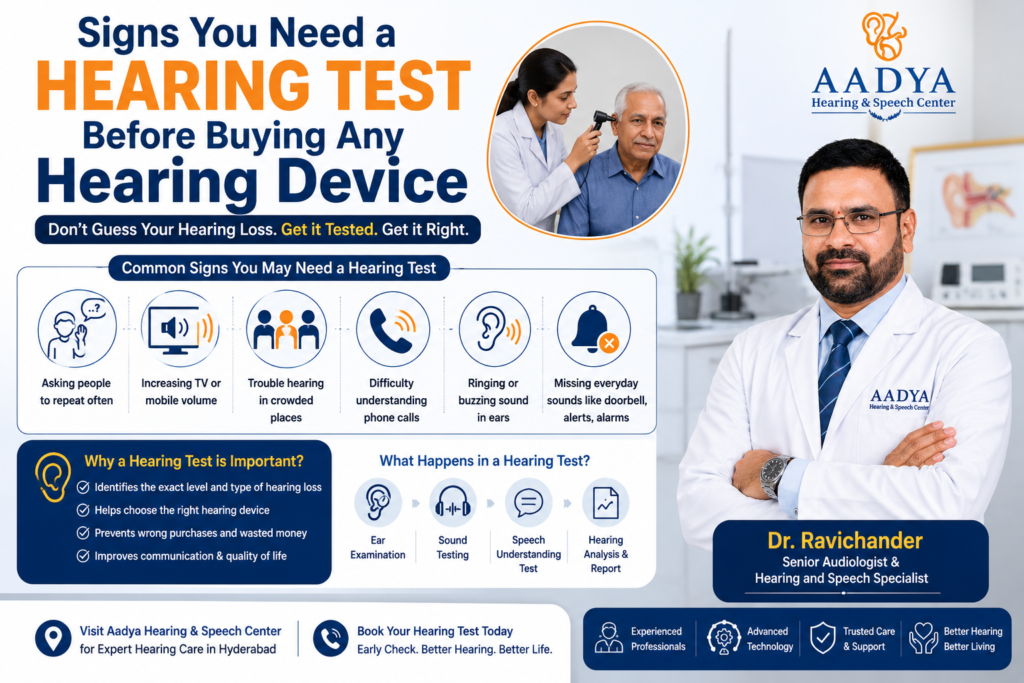
3. Common Signs You May Need a Hearing Test
Asking People to Repeat Frequently
- One of the earliest and most common warning signs.
- Many people start saying:
- “Can you repeat?”
- “What did you say?”
- “Speak louder please.”
- This usually happens because speech clarity becomes weaker.
- You may hear sound but fail to understand actual words properly.
Common situations
- During family discussions
- Office meetings
- Phone conversations
- Public places
- Family members usually notice this problem first.
Increasing TV or Mobile Volume
- Many people slowly increase TV volume without realizing it.
- What feels normal to them may feel extremely loud to others.
Common signs
- Watching TV at maximum volume
- Holding phone speaker close to ear
- Using loud earphone settings regularly
- This indicates reduced hearing sensitivity.
Difficulty Hearing in Crowded Places
- Hearing loss often becomes more noticeable in noisy environments.
Difficult places include
- Restaurants
- Weddings
- Shopping malls
- Family functions
- Traffic areas
- People with hearing problems often hear background noise but cannot focus on speech clearly.
Common complaints
- “Everyone sounds mixed together.”
- “I can hear noise but not understand words.”
Difficulty Understanding Phone Calls
- Phone conversations require clear hearing because facial expressions are absent.
Common problems
- Voices sound muffled
- Speech becomes unclear
- Fast speaking becomes difficult to understand
- Many people avoid calls because conversations become stressful and tiring.
Ringing or Buzzing in the Ears
- Some people hear sounds even when surroundings are quiet.
Common tinnitus sounds
- Ringing
- Buzzing
- Humming
- Whistling
- This condition is called tinnitus.
- Continuous ringing should never be ignored because it may indicate hearing damage.
Missing Everyday Sounds
- Hearing loss reduces awareness of normal daily sounds.
Sounds commonly missed
- Doorbell
- Alarm sound
- Phone ringtone
- Vehicle horns
- Kitchen appliance alerts
- Missing these sounds can create daily inconvenience and safety risks.
4. Signs Senior Citizens Should Never Ignore
- Hearing loss is extremely common among elderly people.
- But many seniors avoid testing because they think hearing decline is a normal part of aging.
Important warning signs
- Avoiding conversations
- Staying silent in gatherings
- Confusion during speech
- Difficulty hearing grandchildren
- Repeated misunderstandings
- Untreated hearing loss often affects emotional health.
Common emotional effects
- Isolation
- Frustration
- Reduced confidence
- Loneliness
- Family support plays an important role in encouraging elderly people to seek hearing care early.
5. Hearing Problems in Young Adults Are Increasing
- Hearing problems are no longer limited to old age.
- Many young adults now face hearing issues because of unsafe listening habits.
Common modern causes
- High-volume earphones
- Gaming headphones
- Loud music exposure
- Long work calls using headsets
- Continuous online meetings
- Long-term loud sound exposure damages hearing nerves slowly.
Early signs in young adults
- Ear ringing after music
- Temporary hearing dullness
- Difficulty understanding speech in noisy places
- Early hearing testing can help prevent permanent hearing damage later.
6. What Happens During a Hearing Test?
Simple and Painless Process
- Many people fear hearing tests unnecessarily.
- In reality, hearing tests are:
- Simple
- Comfortable
- Safe
- Non-surgical
- Usually quick
7. Why Self-Diagnosis is Dangerous
Conductive Hearing Loss
- Sound cannot pass properly through the outer or middle ear.
Common causes
- Ear wax
- Fluid buildup
- Ear infection
- Some conductive hearing problems can improve with treatment.
Sensorineural Hearing Loss
- Caused by inner ear or nerve damage.
Common causes
- Aging
- Loud noise exposure
- Nerve-related problems
- This type often requires long-term hearing support.
Conclusion
- Hearing tests are the first and most important step before buying any hearing device.
- Proper testing identifies the real hearing problem and helps avoid wrong product selection.
- Ignoring hearing symptoms can affect communication, confidence, work, and family relationships.
- Early hearing care improves long-term hearing health and quality of life.
- If you notice any warning signs, getting a professional hearing test is the smartest decision before choosing any hearing support device.