
How to Choose the Right Hearing Device for Senior Citizens
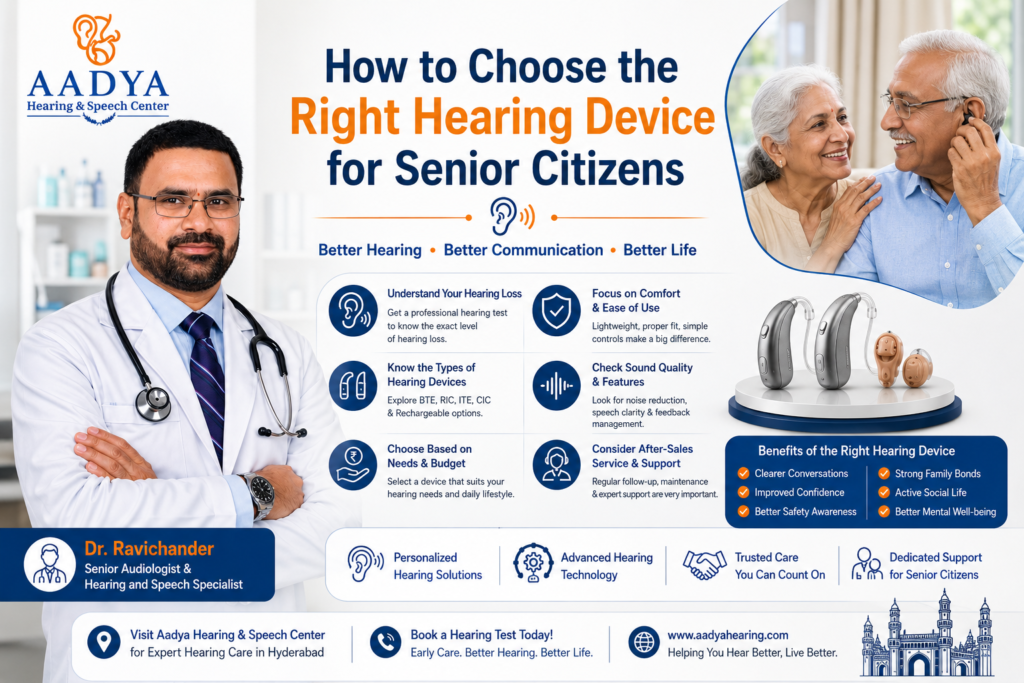
1. Introduction
- Hearing problems are becoming very common among senior citizens.
- Many elderly people do not notice hearing loss in the early stage because the problem usually develops slowly over time.
- In many families, children or family members notice the issue first.
- Senior citizens may start:
- Asking people to repeat sentences often
- Increasing TV volume too much
- Avoiding phone calls
- Staying quiet during family discussions
- Missing important sounds around them
- Hearing loss not only affects hearing ability. It also affects:
- Confidence
- Social life
- Family communication
- Emotional health
- Safety in daily life
- Choosing the wrong hearing device creates many problems:
- Poor sound quality
- Discomfort while wearing
- Difficulty using controls
- Frustration and disappointment
- Wasting money on unsuitable products
- Choosing the correct hearing device can improve:
- Daily conversations
- Social interaction
- Family relationships
- Mental peace
- Independence for senior citizens
- This guide explains everything in simple English so families and elderly users can make better decisions without confusion.
2. Why Hearing Problems Are Common in Senior Citizens
Age-Related Hearing Changes
- Hearing ability naturally reduces as people grow older.
- Tiny hair cells inside the inner ear slowly become weak or damaged with age.
- Once these cells are damaged, hearing ability becomes weaker gradually.
Common difficulties elderly people face
- Hearing children’s voices clearly
- Understanding fast conversations
- Hearing soft sounds properly
- Understanding speech in noisy places
- Many senior citizens can hear sounds but cannot understand words clearly.
- This is one reason why they often misunderstand conversations.
Long-Term Noise Exposure
- Hearing damage does not happen only suddenly.
- Many years of loud sound exposure slowly damage hearing nerves.
Common noise sources
- Traffic noise
- Factory machinery
- Loudspeakers
- Construction work
- Loud TV usage
- Continuous headphone use
- Elderly people who worked in noisy environments usually face higher hearing loss risk.
Medical Conditions
Some health conditions increase hearing problems in elderly people.
Common conditions
- Diabetes
- High blood pressure
- Poor blood circulation
- Ear infections
- Nerve-related disorders
- These conditions affect blood supply and nerve health inside the ear.
- Poor health management may worsen hearing loss over time.
Ignoring Early Symptoms
- Many elderly people believe hearing loss is a normal part of aging and ignore it.
- Some avoid testing because they feel embarrassed or worried about hearing devices.
- Delaying treatment often makes communication harder later.
Problems caused by delaying
- More misunderstanding
- Reduced confidence
- Social isolation
- Increased frustration in family communication
3. Common Signs That a Senior Citizen May Need a Hearing Device
Asking People to Repeat Frequently
- One of the earliest signs of hearing loss.
- Senior citizens may repeatedly say:
- “What?”
- “Can you repeat?”
- “Speak louder.”
- They may hear sound but miss important words.
- Conversations become tiring for both sides.
Increasing TV Volume Too Much
- Elderly users may keep TV volume much higher than normal.
- Family members may feel the sound is too loud while seniors feel it is normal.
Common situations
- Watching TV at maximum volume
- Using loud speaker mode on mobile phones
Difficulty Hearing Phone Calls
- Phone conversations become difficult because voice clarity reduces.
- Seniors may avoid answering calls because they cannot understand clearly.
Common complaints
- “Voice is not clear.”
- “People speak too fast.”
- “Network problem” even when network is fine.
Trouble Hearing in Crowded Places
Background noise becomes a major problem.
Difficult places
- Restaurants
- Family functions
- Temples
- Shopping malls
- Busy roads
- Senior citizens may hear surrounding noise but struggle to focus on speech.
Missing Important Sounds
- Hearing loss affects awareness of daily sounds.
Sounds often missed
- Doorbell
- Alarm clock
- Phone ringtone
- Vehicle horns
- Pressure cooker whistle
- Missing these sounds can create safety risks.
Social Withdrawal
- Many elderly people slowly avoid social interaction because conversations become stressful.
Common behaviors
- Sitting quietly in gatherings
- Avoiding phone conversations
- Losing interest in social activities
- This may lead to loneliness and emotional stress.
4. Why Choosing the Right Hearing Device Matters
Better Communication
- The right device improves speech understanding clearly.
- Daily conversations become easier and smoother.
Benefits
- Better family communication
- Easier phone conversations
- Improved confidence in public speaking
Improved Confidence
- Hearing clearly helps elderly people feel more independent.
- They participate more actively in social situations.
Confidence improves during
- Family gatherings
- Religious events
- Community meetings
- Daily shopping
Reduced Family Frustration
- Hearing problems affect entire families, not only the elderly person.
Common family problems
- Repeating sentences many times
- Misunderstandings
- Communication gaps
- Correct hearing support reduces these issues significantly.
Better Safety Awareness
Hearing important sounds is necessary for safety.
Important sounds
- Vehicle horns
- Emergency alarms
- Gas stove alerts
- Door knocking
- Hearing support improves awareness of surroundings.
Improved Mental Health
Untreated hearing loss often affects emotional well-being.
Common emotional problems
- Frustration
- Isolation
- Stress
- Low confidence
- Better hearing improves overall mental comfort and daily happiness.
5. Types of Hearing Devices for Senior Citizens
Behind-The-Ear (BTE) Devices
- One of the most common hearing devices for elderly users.
- Device sits behind the ear and connects through a small tube.
Advantages
- Easy to wear
- Easy to clean
- Strong battery backup
- Powerful sound support
Best for
- Moderate to severe hearing loss
- Seniors with poor finger movement
In-The-Ear (ITE) Devices
- Fits inside the outer ear area.
Advantages
- Comfortable fitting
- Easier handling than smaller invisible models
- Natural sound experience
Best for
- Mild to moderate hearing loss
Invisible Hearing Devices
- Very small and hidden inside ear canal.
Advantages
- Cosmetic benefit
- Less visible while wearing
Limitations
- Difficult for elderly users with weak eyesight
- Tiny batteries difficult to handle
Rechargeable Hearing Devices
- Can be charged daily like mobile phones.
Advantages
- No need for battery replacement
- Easy daily maintenance
- Long-term convenience
Best for
- Seniors with hand movement difficulty
- Elderly users who forget battery replacement schedules.
Conclusion
- Hearing loss should never be ignored in senior citizens.
- Choosing the right hearing device improves communication, confidence, and daily life.
- Comfort, usability, clarity, and professional support are more important than price alone.
- Early hearing care helps elderly people stay socially active, independent, and emotionally healthy.
- A proper hearing test is always the first and most important step before selecting any hearing device.